.png)
_edited.png)
Why Breakfast is the Most Important Meal of the Day, Plus Filling No-Stress Breakfast Ideas

Breakfast often gets overlooked in busy schedules, but skipping it can hurt more than just your morning routine. Eating a balanced breakfast supports metabolic health, sharpens attention and focus, and helps prevent overeating later in the day. For those of us who are juggling work and family, science has backed up that starting the day with the right meal sets a strong foundation for everything that follows.
How Breakfast Supports Metabolic Health
Metabolic health refers to how well your body processes energy from food. Eating a breakfast rich in protein and fiber helps regulate blood sugar levels and keeps your metabolism steady. When you skip breakfast or eat something high in sugar and low in nutrients, your body can experience spikes and crashes in blood sugar. This leads to fatigue and cravings that make it harder to focus and easier to overeat later.
Research shows that people who eat a high-protein, fiber-rich breakfast tend to have better insulin sensitivity and a lower risk of metabolic disorders (e.g., fatty liver and type 2 diabetes). This means your body uses energy more efficiently, which supports weight management and overall health.
Breakfast Boosts Attention and Focus
Starting your day with a meal that balances protein, fiber, and healthy fats fuels your brain. Protein provides amino acids that support neurotransmitters, while fiber slows digestion, giving you steady energy. This combination helps you stay alert and focused through busy mornings, whether you’re managing work projects or getting kids ready for school.
Skipping breakfast or eating sugary foods can cause energy dips and difficulty concentrating. This is especially vital for those of us struggling with attention and focus; so basically, most of us, while living in the age of modern technology and doomscrolling. I’ve noticed that when I eat a balanced breakfast, I’m more productive and less tempted by late-night cravings.
Benefits of a Substantial Breakfast
Eating a filling breakfast controls hunger later in the day. When your body gets enough nutrients early on, you’re less likely to binge on high-calorie snacks or oversized meals, which can lead to an energy surplus. Breakfasts providing at least 350 calories elicit a more robust appetite and satiety response than smaller meals.¹ A breakfast with protein, fiber, and healthy fats keeps you full longer. This means fewer cravings and better portion control at lunch and dinner.
Key Components of a Satisfying Breakfast
Protein: Helps in muscle repair and keeps you feeling full.
Fiber: Aids digestion and prolongs satiety.
Healthy Fats: Contributes to overall health and enhances fullness.
Impact on Meal Timing and Portion Control
By consuming a hearty breakfast, individuals are likely to experience reduced cravings throughout the day, leading to improved portion control during subsequent meals.

No-Stress Breakfast Ideas That Keep You Full
Here are five easy, balanced breakfasts that combine protein, fiber, and healthy fats. They take little time to prepare and keep you energized.
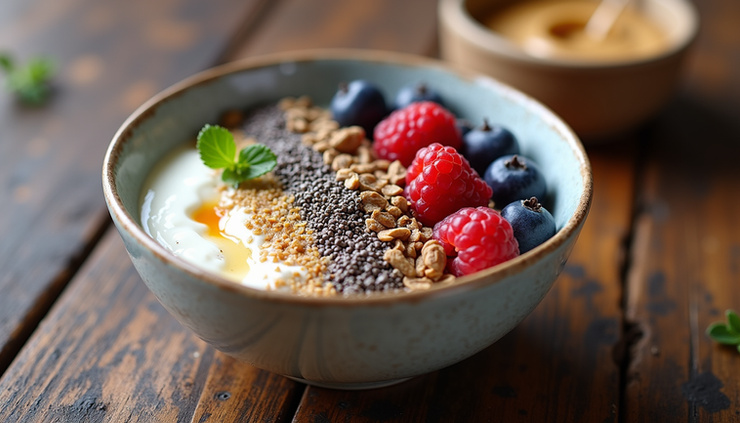
1. Protein Yogurt Bowl (5 minutes)
Greek yogurt or skyr
Chia seeds and flaxseed
Fresh or frozen berries
Drizzle of nut butter
This bowl is high-protein, fiber-rich, and packed with healthy fats. The combination stabilizes blood sugar and keeps hunger at bay.
2. Savory Egg Wrap
Eggs, scrambled or fried
Sautéed spinach
Sliced avocado, turkey bacon, and/or cheese
Whole-grain or almond flour wrap
This wrap is portable and balanced. The protein and fiber keep you full, and the healthy fats from avocado support metabolic health.
3. Overnight Oats (Prep for 2–3 days)
Rolled oats
Chia seeds or ground flaxseed
Protein powder
Almond milk
Frozen berries
Optional: walnuts or peanut butter
Overnight oats are fiber-rich and high-protein. Adding nuts or peanut butter adds staying power, so you feel satisfied until lunch.
4. Smoothie That Actually Fills You
Protein powder
Frozen fruit
Spinach or kale
Nut butter, Greek yogurt, and/or chia seeds
Milk of your choice or coconut water
Many smoothies lack fat or fiber, which makes them less filling. Including nut butter or chia seeds balances the smoothie and supports steady energy.
5. Elevated Toast
Sourdough bread
Cottage cheese or ricotta
Smoked salmon or eggs
Olive oil drizzle and everything seasoning
This feels like a café treat but is balanced with protein, fiber, and healthy fats. It’s a satisfying way to start your day without stress.

Making Breakfast Work for Your Busy Life
The key to making breakfast a habit is simplicity and balance. Preparing overnight oats or a protein yogurt bowl the night before saves time. Keeping ingredients like eggs, spinach, and nut butter on hand makes it easy to throw together a savory wrap or smoothie.
Focusing on meals that combine high protein, fiber-rich ingredients, and healthy fats supports your metabolic health and keeps your energy steady. This helps you stay productive and avoid overeating, even on the busiest mornings.
Try one of these no-stress breakfast ideas tomorrow and notice how much better your day starts.
The information shared on this blog is for educational purposes only and is not intended as medical or individualized nutrition advice. Because every person’s health needs are unique, please consult with a qualified healthcare professional or registered dietitian for personalized recommendations and care.
Resources:
Gwin, J. A., & Leidy, H. J. (2018). A Review of the Evidence Surrounding the Effects of Breakfast Consumption on Mechanisms of Weight Management. Advances in nutrition (Bethesda, Md.), 9(6), 717–725. https://doi.org/10.1093/advances/nmy047

Comments